
Basement Moisture Control for Maine Homeowners — Practical Waterproofing & Solutions
Basement moisture is a frequent—and expensive—problem for Maine homeowners. The right waterproofing stops water at the source, lowers mold risk, and protects your home’s structure. This guide explains why Maine basements get wet, how interior and exterior systems work, when structural repair is needed, and how crawl space encapsulation helps with long-term control. You’ll learn to link common causes—spring snowmelt, high water table, clay soils, clogged gutters—to practical fixes like sump pumps, French drains, and vapor barriers. We focus on Maine conditions, from coastal salt-influenced soils to inland clay and freeze-thaw effects, and show how routine maintenance and targeted work save money and improve indoor air quality. Continue for clear step-by-step explanations, side-by-side method comparisons, quick homeowner checklists, and straightforward cost factors to help you plan and prioritize moisture control projects.
What Are the Common Causes of Basement Moisture in Maine?
Basements get wet when surface water or rising groundwater overwhelms a foundation’s defenses, creating hydrostatic pressure that forces water through joints, cracks, or porous masonry. Heavy seasonal rain, rapid spring snowmelt, and a high local water table all push water toward foundations. Poor grading, clogged gutters, and compacted clay soils make it worse by preventing proper surface drainage and increasing lateral pressure. Coastal properties also deal with salt-influenced soils that change drainage behavior and can speed corrosion of metal components, while inland clay holds water and slows subsurface flow. Pinpointing the main local cause helps you decide whether an interior fix, exterior excavation, or structural repair will give the most reliable long-term result. Start by inspecting your neighborhood’s climate and soil conditions to choose the right approach.
How Do Maine’s Climate and Soil Conditions Affect Basement Moisture?
Maine’s winters bring deep snowpacks and a spring thaw that can concentrate runoff and raise groundwater near foundations. Inland clay soils retain water and reduce vertical drainage, which ups lateral pressure against foundation walls; coastal sandy soils drain faster but can have high seasonal water tables and salt intrusion that affect system longevity. Freeze-thaw cycles open hairline cracks and shift soils, worsening seepage at joints and slab edges. Examples include coastal lots seeing tide-influenced groundwater rises and inland sites remaining saturated after heavy rains—each situation points to different preventative steps like improved surface grading versus subsurface drainage systems.
What Signs Indicate Moisture Problems in Your Basement?
You can spot moisture problems with visual, smell, and structural clues that point to water intrusion or elevated humidity. Look for a persistent musty odor, visible mold or mildew, efflorescence (white powder) on concrete, peeling or blistering paint, water stains or damp patches on walls and floors, and standing water after storms. Structural warning signs—stair-step cracks, bulging or bowing walls, and doors that stick—often come with moisture problems and may signal deeper foundation issues. Early detection lets you choose targeted fixes—improving drainage, adding a dehumidifier, or calling a pro—before issues worsen.
- Common visible signs to watch for:
- Musty odor: A steady damp smell usually means elevated humidity and organic growth.
- Efflorescence: White mineral deposits on masonry show water moving through concrete.
- Water stains or peeling paint: Repeated moisture contact that damages finishes.
Use these indicators as a homeowner checklist to decide when to schedule a diagnostic inspection and prioritize repairs.
Which Interior Basement Waterproofing Methods Help Control Moisture?
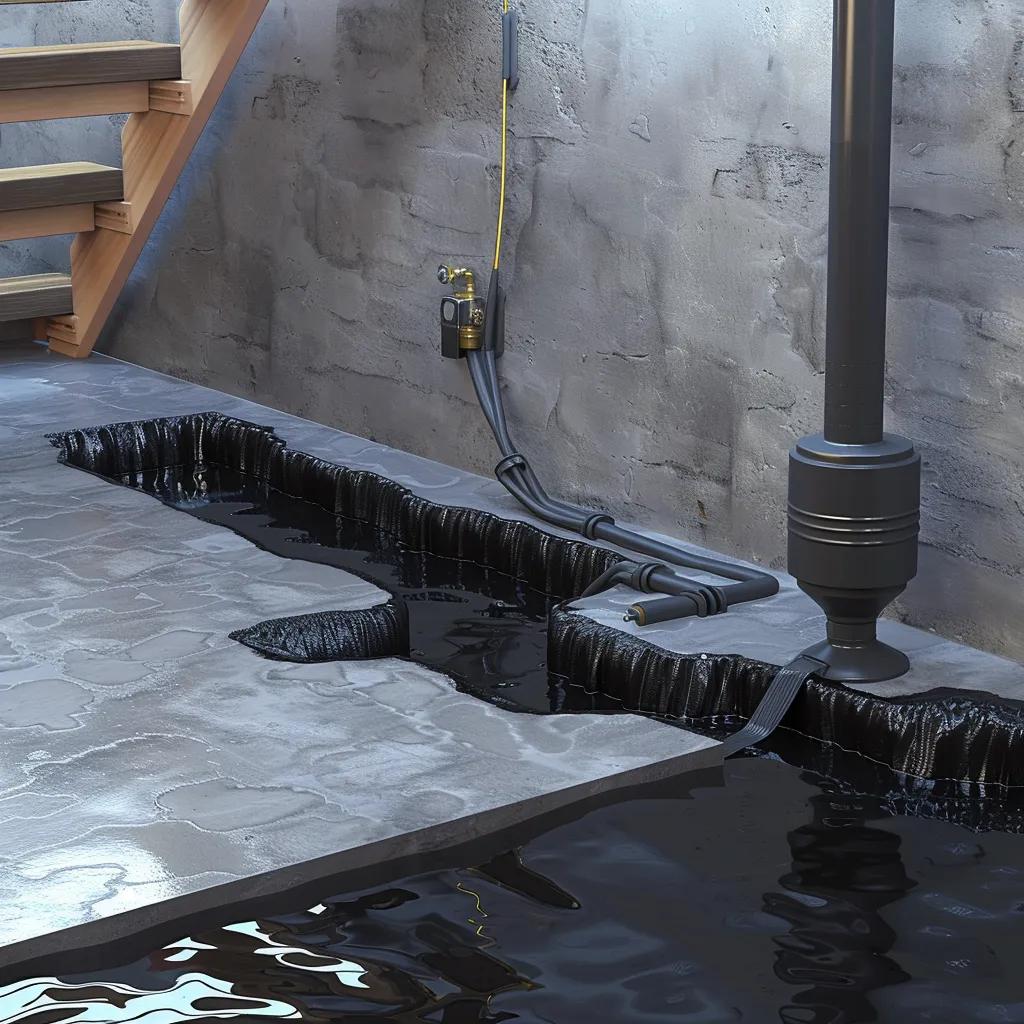
Interior waterproofing covers systems installed inside the foundation line that intercept water as it approaches or enters the basement, lowering humidity and preventing standing water. Typical interior options are sump pumps, interior drainage channels or drain tile routed to a sump, wall and floor sealants, and mechanical dehumidifiers. These solutions reduce the effects of hydrostatic pressure and limit moisture migration through concrete or block. Interior work is often quicker and less disruptive than exterior excavation, making it the right choice when water enters at the floor-wall junction or where exterior access is limited. The best mix depends on how much water you’re dealing with, foundation condition, and your goals for basement use and indoor air quality.
Below is a quick comparison to help weigh interior methods by how they work, their benefits, and typical trade-offs.
Different interior systems use distinct mechanisms to manage water and humidity.
How Does Sump Pump Installation Prevent Basement Flooding?
A sump pump prevents basement flooding by collecting groundwater in a sump pit and actively discharging it away from the home, which lowers hydrostatic pressure and removes standing water. A typical system includes the pit, a submersible or pedestal pump, a float or solid-state switch to trigger the pump, and a routed discharge that directs water well away from the foundation. Regular checks—testing the float, running the pump, and keeping the discharge clear—are key, especially through Maine’s freeze-thaw cycles and spring melt. Pairing a sump pump with interior drainage improves efficiency, and battery backup options help protect you during storm-related outages.
What Are the Benefits of Interior Drainage Systems and Sealants?
Interior drainage systems collect water at the base of foundation walls and move it to a sump so floors and lower walls stay dry. Sealants reduce vapor movement through pores, lowering indoor humidity and making conditions less hospitable to mold—though they won’t repair structural cracks or stop water driven by high hydrostatic pressure. Drainage systems tackle the source of moisture and are long-lasting, while sealants are a useful supplement for lower-risk areas or as a temporary measure during repairs. Combining drainage, crack repairs, and regular monitoring gives a balanced plan for basements used as living areas or for storage.
Once you understand interior options and trade-offs, consider local contractors for installation and regular service—sump checks and drainage inspections timed to Maine’s seasonal cycles keep systems reliable.
How Can Exterior Waterproofing Solutions Protect Your Maine Basement?

Exterior waterproofing keeps water from ever reaching the foundation by addressing surface and subsurface flows before they press on walls or enter the basement. Key exterior strategies include excavating and applying waterproof membranes, installing French drains to move subsurface water away, and regrading the yard to promote positive drainage. These measures reduce hydrostatic pressure and lower the water table near the foundation. Exterior work is usually the most permanent solution for chronic, high-volume infiltration or when structural problems are present. Knowing when exterior excavation is warranted helps homeowners invest in long-term protection that reduces interior maintenance down the road.
Why Is French Drain Installation Essential for Moisture Control?
A French drain intercepts subsurface water with a trench containing a perforated pipe wrapped in filter fabric and gravel, carrying water away from the foundation and relieving lateral pressure on walls. Proper placement—at footing level or below the slab—lets the drain capture migrating groundwater and prevents leaks at the floor-wall junction. Maintenance is mostly occasional checks for clogging and ensuring the outlet remains clear. French drains are especially useful on Maine properties with high water tables or clay soils that hold water near foundations, and they complement exterior membranes and proper grading to create a complete water-management plan.
- Key steps in a French drain installation include:
- Trench excavation to the correct depth: Places the drain where it intercepts subsurface flow.
- Lining with filter fabric and gravel: Keeps soil out while allowing water to flow.
- Installing a perforated pipe and backfilling: Channels water to a safe discharge area.
Following these steps ensures a French drain will reduce long-term moisture risk when properly executed.
How Do Grading and Exterior Foundation Waterproofing Work Together?
Exterior waterproofing is most effective when combined with positive grading, well-managed gutters and downspouts, and a continuous exterior membrane. Grading should slope away from the house a recommended distance so surface runoff drains safely. Downspout extensions and working gutters prevent concentrated water at the foundation line, and an exterior membrane blocks remaining seepage through wall assemblies. Together these layers form a defense: grading reduces surface inflow, gutters control roof runoff, and membranes handle subsurface seepage. Coordinating landscape changes with membrane work and proper discharge locations reduces maintenance and lowers the chance that heavy spring melt or coastal surge events will overwhelm the system.
When exterior work is the right answer, Rite Basement Waterproofing Maine installs French drains, applies exterior membranes, and adjusts grading with Maine soils and climate in mind. Homeowners can request a free estimate to review long-term options and how systems integrate.
When Is Foundation and Structural Repair Necessary for Moisture Control?
Structural repair becomes necessary when moisture issues come with foundation movement or when water enters through cracks and deformations that weaken structural integrity. Signs that call for repair rather than only waterproofing include large horizontal or stair-step cracks, visible wall bowing, significant settlement showing as uneven floors or sticking doors, and repeated water entry despite drainage efforts. Fixing these problems usually combines waterproofing to control water with structural solutions—such as crack injection, piering, or wall anchors—to restore stability and stop further movement. A careful inspection and monitoring plan help determine the right sequence of repairs so you both stop water and correct foundational distress.
How Does Basement Crack Repair Prevent Water Infiltration?
Crack repair uses injection methods—epoxy or polyurethane—to fill voids and seal paths that let water and vapor pass through foundation walls and slabs, restoring a continuous barrier. Epoxy injections are used to strengthen and bond structural cracks; polyurethane injections expand to seal active leaks and form a flexible water-tight barrier. The process includes cleaning the crack, installing injection ports, pumping material under pressure, and finishing the surface for durability. When combined with drainage and exterior sealing where needed, crack injection stops recurring leaks and reduces the need for repeated interior fixes.
What Are the Signs and Solutions for Foundation Settlement and Bowing Walls?
Settlement and bowing walls show up as sloped or uneven floors, misaligned doors and windows, stair-step masonry cracks, and inward-tilting basement walls—signs of soil movement, lateral pressure, or missing support. Solutions range from underpinning with piers to transfer load to stable strata, to wall anchors or braces that correct inward movement and stabilize walls. Choice of method depends on severity, soil conditions, and site access. Prompt evaluation matters because ongoing settlement and bowing can open new moisture paths and undermine waterproofing—so combining structural stabilization with moisture control produces the most durable result.
- Warning signs of structural concern:
- Stair-step cracks in masonry: Points to differential settlement.
- Bowing or tilting walls: Shows lateral pressure or failing wall ties.
- Doors/windows that no longer fit: Indicates foundation movement affecting openings.
These warning signs should prompt a professional assessment to match repair techniques to soil and structural conditions.
What Are the Benefits of Crawl Space Encapsulation for Moisture Control in Maine?
Crawl space encapsulation seals the crawl area with a continuous vapor barrier, insulation, and controlled ventilation or dehumidification to block soil moisture from entering living spaces and to stabilize humidity. A typical system uses a durable vapor barrier with taped seams, insulated rim joists, and a dehumidifier sized to keep relative humidity in the recommended range. Together these measures lower mold risk, improve indoor air quality, and boost energy efficiency by reducing heat loss through floors. For Maine homes, encapsulation helps manage moisture from damp soils and seasonal changes and reduces pest and corrosion risks tied to high humidity. When combined with exterior drainage and correct grading, crawl space encapsulation becomes an important part of a whole-house moisture strategy.
How Do Vapor Barriers and Insulation Improve Basement Air Quality?
A properly installed vapor barrier stops moisture-laden soil gases and vapor from entering conditioned areas, which cuts down on mold substrate and lowers allergen counts—improving indoor air quality. Insulating the rim joist and crawl walls creates a thermal break that reduces condensation on cold surfaces; choosing R-values suited to Maine’s climate helps keep floor temperatures stable and lowers heating demand. Seams and penetrations must be taped and sealed for continuity, and durable materials resist puncture and wear. Together, sealed vapor control and correct insulation deliver measurable air-quality and comfort gains and work well alongside ventilation or dehumidification.
Why Is Crawl Space Dehumidification Important for Moisture Prevention?
Dehumidification in an encapsulated crawl space keeps relative humidity in the target range—usually 30% to 50%—to prevent mold, slow corrosion, and protect wood framing and finishes. A correctly sized dehumidifier runs continuously or on a controller to stabilize humidity and avoid the stress of wide swings on building materials. Maintenance includes checking drains, swapping filters, and annual performance checks. Dehumidifiers pair with vapor barriers and insulation to hold moisture in check; regular monitoring confirms the system is working as intended and helps maintain long-term comfort and durability.
Rite Basement Waterproofing Maine offers crawl space encapsulation evaluations and will recommend vapor barriers, insulation approaches, and dehumidifier sizing tailored to your crawl space and estimate the work.
How Much Does Basement Waterproofing Cost in Maine and What Are Your Options?
Costs for basement waterproofing in Maine vary widely based on the chosen method, the extent of damage, foundation type, site access, and local labor rates. Options range from lower-cost interior sealants and dehumidification, to mid-range sump pump and interior drainage installs, up to higher-cost exterior excavation, membrane systems, or structural repairs. Major cost drivers include excavation needs, French drain depth and length, foundation access, material choices (membranes, pipe, gravel), and any stabilization work required—plus seasonal scheduling, permits, and landscape restoration. Understanding these factors helps homeowners compare quotes and decide whether a short-term interior fix or a more permanent exterior solution best fits long-term goals and resale value. The table below highlights common cost factors and their typical impact.
What Factors Influence Basement Waterproofing Costs in Maine?
Primary cost drivers are the method chosen (interior vs exterior), how much water or damage is visible, foundation type (block, poured concrete, stone), soil conditions (clay vs sand), site access, and the need for landscape restoration after excavation. Seasonal timing affects labor availability and permitting, and nearby mechanical systems or utilities can add complexity. Homeowners should weigh immediate repair needs against lifecycle costs—comprehensive exterior work often lowers future maintenance and repeated interior fixes. A clear assessment lets you budget realistically and prioritize the most effective interventions.
Are There Financing or Rebate Options Available for Maine Homeowners?
Homeowners may qualify for financing programs, energy-efficiency rebates, or local assistance for moisture-control projects—especially when upgrades improve energy performance or address health risks—but availability and eligibility vary by municipality and change over time. Check current state and local programs for potential rebates tied to insulation, dehumidification, or combined energy projects. Many contractors also offer financing plans to spread project costs. For tailored guidance, ask your provider to help identify current financing and rebate options that could apply to your scope of work.
Rite Basement Waterproofing Maine provides free estimates and will discuss financing choices to help Maine homeowners compare cost-effective combinations of interior and exterior solutions.
- Typical homeowner steps when planning financing:
- Obtain multiple estimates: Compare scope, materials, and long-term value.
- Ask about contractor financing: Many providers offer payment plans to spread costs.
- Investigate local/state rebates: Energy or health-related upgrades sometimes qualify.
Following these steps helps homeowners make informed decisions and match their investment to the desired level of protection.
Frequently Asked Questions
What are the long-term benefits of basement waterproofing?
Waterproofing delivers lasting benefits: improved structural integrity, better indoor air quality, and higher property value. Preventing water intrusion avoids costly repairs tied to mold and structural damage and creates a healthier living space by reducing allergens. A dry basement also expands usable space for storage or finished rooms. In short, waterproofing is a proactive investment that protects your home and pays dividends over time.
How often should I inspect my basement for moisture issues?
Inspect your basement at least twice a year—spring and fall are good times—and after heavy rain or rapid snowmelt. Look for damp spots, mold growth, musty odors, and any new stains or standing water. Regular checks help catch problems early so you can address them before they become costly.
Can landscaping affect basement moisture levels?
Absolutely. Proper grading and drainage around the foundation channel water away from the house and lower the risk of intrusion. Make sure the ground slopes away from the foundation and that gutters and downspouts are clear and direct water away. Strategic plantings can help absorb excess moisture, but they shouldn’t interfere with drainage paths.
What is the role of a dehumidifier in basement moisture control?
A dehumidifier controls relative humidity—typically aiming for 30%–50%—to prevent mold, wood rot, and musty odors. It removes excess moisture from the air and is especially useful in damp climates like Maine’s. Regular maintenance—cleaning filters and checking drains—keeps the unit running efficiently and supports a healthier indoor environment.
Are there DIY methods for basement waterproofing?
Some DIY steps help: apply waterproof sealants to small areas, keep gutters clean, and run a dehumidifier. These measures can reduce minor humidity issues but won’t fix structural cracks or chronic water infiltration. For persistent or structural problems, consult a professional to ensure a lasting solution.
What should I do if I find mold in my basement?
If you find mold, address it quickly. First, stop the moisture source. For small areas, wear protective gear and clean surfaces with detergent and water or a commercial cleaner. For larger or persistent infestations, hire a professional remediation service. After cleanup, implement moisture-control steps—improved drainage, better ventilation, and dehumidification—to prevent recurrence.
How can I choose the right waterproofing contractor?
To choose a contractor, research local companies and read reviews, then request multiple estimates to compare scope and pricing. Verify licenses and insurance, ask for references, and confirm experience with the methods you need. A reputable contractor will provide a clear plan, timeline, and warranty so you feel confident moving forward.
Conclusion
Controlling basement moisture matters for Maine homeowners—it prevents water damage, limits mold, and protects your home’s structure. By understanding local conditions and applying targeted solutions like sump pumps, drainage systems, or crawl space encapsulation, you can improve indoor air quality and safeguard your investment. Taking proactive steps now reduces long-term costs and adds comfort and value to your property. Contact our experts to review your situation and keep your basement dry and healthy for years to come.